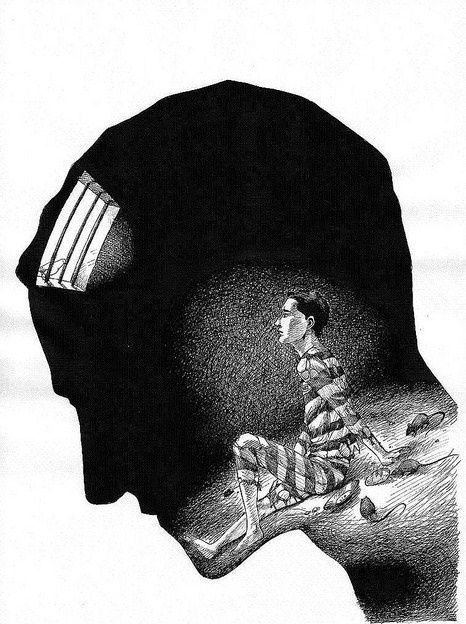
Crazy house. Cuckoo’s nest. Loony bin.
These are just a few of the words that represent the ostracization of people suffering from mental health disorders. There’s no doubt that there is a negative stigma around mental health in the 21st century, especially against seeking help for illness. Yet, this pessimistic view on mental health disorders is nothing new. From the beginnings of treatment for mental health disorders, there has been a history of hatred that persists throughout recent centuries.
Before the institution of mental hospitals, early victims of mental health disorders were often shoved to the streets by their families. These people were considered ‘mad’ and shut out from the community. Forced to beg for food and shelter, these victims were forced to wander the streets simply because their brains were not wired the same.
However, conditions for people with mental health disorders did not improve much once they were finally offered treatment. Dating back to the first mental asylum in the Middle East during the fifth century, patients who were admitted into the hospital were treated as prisoners rather than patients. They were chained up and treated as animals, denying patients of basic human rights. In fact, one technique used to ‘manage’ the patients was the same practice used on horses in the Renaissance era.
Fast forward to the 1700’s, and conditions had not improved much in insane asylums. Patients were subjected to the practice of hydrotherapy, a way of decreasing agitation through the use of extremely hot or extremely cold water. Journalist Nellie Bly set out to expose the horrific treatment of patients by going undercover to Blackwell Island Insane Asylum in New York. Bly reported having been beaten, jumped, tied, and thrown into a bathtub of cold water. Insane asylums also made use of physical restraints for aggravated patients, claiming that these tactics kept the patients and those around them ‘safe’. Straitjackets, manacles, waistcoats, and wrist restraints were kept on for hours, days, or sometimes weeks.
Not only were calming tactics extremely ineffective, medical treatments for mental health disorders were also underdeveloped and under researched. For example, lobotomies were thought to cure schizophrenia, bipolar disorder, depression, and many other mental health disorders. A lobotomy is a surgical procedure in which certain areas of the brain are severed, such as parts of the prefrontal cortex. This procedure was incredibly dangerous and often
resulted in complications such as death. Medication treatment was beginning to be experimented with, but medication was not available to many patients.
It was not until 1843 when activist Dorthea Dix presented her case to the Massachusetts Legislature that mental health facilities began to reform. Dix traveled to hundreds of facilities, gathering information about inhumane treatment to present to the court. In the end, the U.S. government provided funding for 32 mental institutions.
Compared to the times of shackles and chains, the negativity around mental health has improved astronomically. People suffering from mental health disorders are no longer seen as “mad” or “insane”. Thousands of medications have been tested and proven effective to alleviate symptoms of mental health disorders. Mental health facilities no longer function as prisons for their patients.
Yet, there is still a negative stigma around mental health. People are still being shamed for seeking treatment. People are still being blamed for having a mental health disorder. Much work has already been done to stop the stigma, but there is still much that needs to be done. It is up to people like us to carry on the mission of Dorothea Dix and completely eradicate the spreading stigma.
 Mind Your Mind