A History of Hatred

Crazy house. Cuckoo’s nest. Loony bin. 

These are just a few of the words that represent the ostracization of people suffering from mental health disorders. There’s no doubt that there is a negative stigma around mental health in the 21st century, especially against seeking help for illness. Yet, this pessimistic view on mental health disorders is nothing new. From the beginnings of treatment for mental health disorders, there has been a history of hatred that persists throughout recent centuries. 

Before the institution of mental hospitals, early victims of mental health disorders were often shoved to the streets by their families. These people were considered ‘mad’ and shut out from the community. Forced to beg for food and shelter, these victims were forced to wander the streets simply because their brains were not wired the same. 

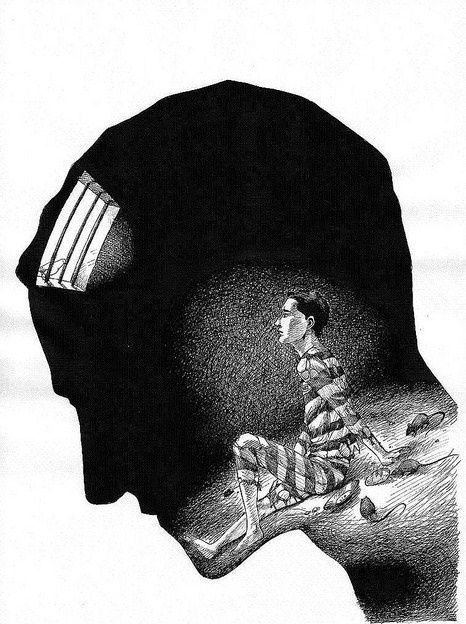
However, conditions for people with mental health disorders did not improve much once they were finally offered treatment. Dating back to the first mental asylum in the Middle East during the fifth century, patients who were admitted into the hospital were treated as prisoners rather than patients. They were chained up and treated as animals, denying patients of basic human rights. In fact, one technique used to ‘manage’ the patients was the same practice used on horses in the Renaissance era. 

Fast forward to the 1700’s, and conditions had not improved much in insane asylums. Patients were subjected to the practice of hydrotherapy, a way of decreasing agitation through the use of extremely hot or extremely cold water. Journalist Nellie Bly set out to expose the horrific treatment of patients by going undercover to Blackwell Island Insane Asylum in New York. Bly reported having been beaten, jumped, tied, and thrown into a bathtub of cold water. Insane asylums also made use of physical restraints for aggravated patients, claiming that these tactics kept the patients and those around them ‘safe’. Straitjackets, manacles, waistcoats, and wrist restraints were kept on for hours, days, or sometimes weeks. 

Not only were calming tactics extremely ineffective, medical treatments for mental health disorders were also underdeveloped and under researched. For example, lobotomies were thought to cure schizophrenia, bipolar disorder, depression, and many other mental health disorders. A lobotomy is a surgical procedure in which certain areas of the brain are severed, such as parts of the prefrontal cortex. This procedure was incredibly dangerous and often

resulted in complications such as death. Medication treatment was beginning to be experimented with, but medication was not available to many patients. 

It was not until 1843 when activist Dorthea Dix presented her case to the Massachusetts Legislature that mental health facilities began to reform. Dix traveled to hundreds of facilities, gathering information about inhumane treatment to present to the court. In the end, the U.S. government provided funding for 32 mental institutions. 

Compared to the times of shackles and chains, the negativity around mental health has improved astronomically. People suffering from mental health disorders are no longer seen as “mad” or “insane”. Thousands of medications have been tested and proven effective to alleviate symptoms of mental health disorders. Mental health facilities no longer function as prisons for their patients. 

Yet, there is still a negative stigma around mental health. People are still being shamed for seeking treatment. People are still being blamed for having a mental health disorder. Much work has already been done to stop the stigma, but there is still much that needs to be done. It is up to people like us to carry on the mission of Dorothea Dix and completely eradicate the spreading stigma. 

Is it a joke to you?

It’s the first semester of college. I’m sitting by myself  in my abnormal psychology class surrounded by a bunch of upperclassmen whose names I never cared to learn. On this specific day, my professor assigns the large project of the year- a 200 point paper that must be 6-8 pages in length. The boy who sits behind me makes a comment to his friends that still rings in my ears. 

“This paper makes me want to kill myself.” 

Some of his friends responding by laughing. Some respond with phrases of approval and agreeance. No one objects to what he said. In my head, I’m thinking to myself, “When did suicide become such an acceptable joke?” 

Suicide is not a joke. It’s a real epidemic that takes nearly 45,000 lives per year. And that is just in the United States. 

Suicide is the tenth leading cause of death in the US and the second leading cause of death in people aged 15-25 years worldwide. The cause of suicide is different for every person and may be the result of many different biopsychosocial factors. However, many suicides are the result of untreated or undiagnosed mental health disorders, especially depression. 

While jokes about depression and sucide are becoming more common, so is the amount of teens suffering from these disorders. In a study published by the American Psychological Association, scientists found that mental health disorders in young adults have doubled in the past decade. 

What exactly is causing this rise in teen depression and suicide? 

Scientists have not been able to determine the exact cause, but there are multiple hypotheses around the epidemic. Some researchers believe that increased screen time and social media use is contributing to the rise of depression in teens. Others point to the increased use of drugs and alcohol promoting the influx of mental health disorders. 

While I recognize that social media and substances are major contributors, I strongly believe that the negative stigma around mental health is reason for the rise in depression and suicide. It’s obvious that depression has become a running joke in youth and teens, so those actually suffering from the disorder are not being taken seriously. 

Those who are diagnosed with depression may not feel that their feelings will be validated. When trying to talk to a close friend about their mental health, they may not be taken seriously, resulting in learned helplessness towards the situation. For those making jokes about depression, this could be a serious trigger for someone who is actually suffering. So many kids nowadays joke about being depressed and wanting to kill themselves that depression has gone from being a mental health disorder to a personality trait. 

So what can we do about it? 

Whenever you hear someone joking about depression or suicide, don’t just sit in silence. Stand up for yourself and anyone around you who may be silently suffering. Remind that person that mental illness is not a joke, but a serious topic that should not be taken lightly. If you are comfortable enough, possibly share a personal story connected to depression or suicide, and this person is likely to realize that they need to sympathize instead of ostracize. Don’t be afraid to start a healthy conversation with someone. Simply ask them: 

Is it a joke to you? 

Sticks and Stones

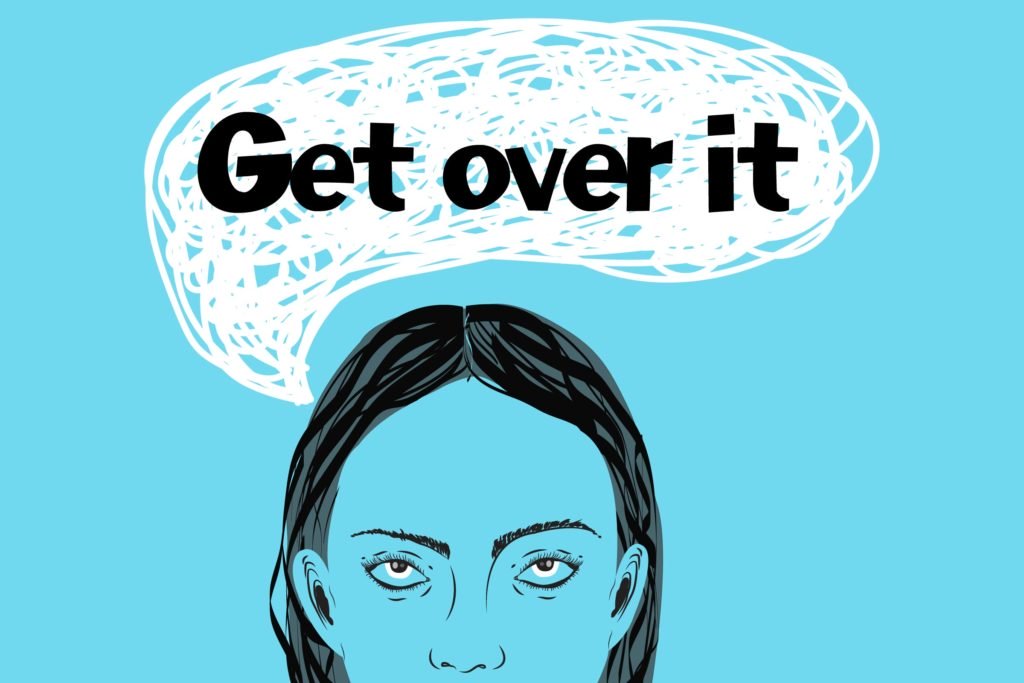
“Just calm down.” 

“I don’t understand why you’re freaking out.” 

“You’re making a big deal out of nothing.” 

“Quit making a scene.” 

Having suffered from diagnosed anxiety for eight years now, I have heard these phrases an unfathomable amount of times. And I’m fairly certain that I am not the only nervous nelly who has been exposed to hurtful words coming from friends and family who do not suffer from said mental illness. 

I’m sure you know the common phrase “sticks and stones may break my bones”… but what many people don’t realize is that words do hurt. When I am suffering from an anxiety attack, the last thing I want someone to tell me is that I’m overreacting. This causes feelings of guilt to build up inside of me, and I feel like a burden to those around me. Certainly I’m not the only one with anxiety who has ever felt this way. 

In my opinion, anxiety disorder is one of the most misunderstood common mental illnesses. People who react inappropriately to someone undergoing a panic attack often just misunderstand or are uninformed about anxiety disorders. 

So what exactly is an anxiety disorder? 

According to the DSM-5, which is a manual for assessing and diagnosing mental health disorders, generalized anxiety disorder is characterized as “excessive anxiety and worry, occurring more days than not for at least 6 months, about a number of events or activities”. 

Often times, stress and anxiety are used interchangeably, but they are two distinct terms in the field of psychology. Stress is the body’s short-term response to a perceived threat or harmful situation. Short-term stress can actually be beneficial for motivation or escaping danger. However, our bodies are not built to handle long-term stress. Once stress occurs over an extended period of time, it can then develop into full-blown anxiety. 

Although there is one generalized definition for anxiety disorder, nobody with a diagnosed anxiety disorder experiences the same symptoms or has the same triggers. Personally, my anxiety is triggered by large crowds and the fear of illness. Sure, there are other people who also fear crowds and illness, but I am not one to speak on their experience of anxiety. 

This is one of the reasons that anxiety disorders are difficult to tend to. Every person has different needs when experiencing anxiety or a panic attack. 

It’s important to foster open, healthy conversations with friends and loved ones about your needs with anxiety so they know how to react appropriately. For example, I let my friends know how to detect when I am having a panic attack in a public setting so that they can help me escape the situation. When I aggressively play with my hair, my leg is tapping rapidly, and I keep looking around the room for an exit, my friends know that I need to step out and calm down. Telling friends and family how to react and assist in calming a panic attack will prevent inappropriate comments from escalating the situation. 

However, it’s not only about standing up for yourself, but also being an advocate for others. If you know that someone is having anxiety or a panic attack and someone makes a rude comment, call them out. Let that person know that the comment was not appropriate, and speak with them about how to effectively respond. 

Words hurt, but we can prevent others from saying hurtful comments towards those with mental health disorders. You are not defined by your disorder, but it is important to define your needs to those around you, creating a safe environment to talk about mental health. 

Mind you read my first post?

Image result for psychology photos
MIND YOUR MIND: AN INTRODUCTION

What we achieve inwardly will change our outer reality.

— Plutarch.

Hello! My name is Kara House, and I am currently a sophomore psychology major and communications minor at Marian University. Along with being a full time student, I am extremely involved in our sorority, Theta Phi Alpha. In my free time, I enjoy hanging out with friends, going to the gym, watching Netflix, and of course, writing. I have always loved writing and have kept multiple journals over the years. In high school, I joined newspaper my sophomore year and was appointed as editor my senior year. Our paper won a national competition and multiple regional awards. This drive for journalism allowed me to easily make the decision of pursuing a communications minor. However, psychology has always been my primary passion, and I aspire to be a clinical psychologist with a focus on anxiety and depression. This blog serves as a creative outlet for two of my most prominent passions- writing and psychology. 

This blog began as an assignment for my digital journalism class. We were given free range to choose any topic, so picking psychology was quite literally a no-brainer. The area of psychology that I have chosen to focus on is mental health disorders. I suffer from both anxiety and depression myself, which fuels my fire for mental health. In today’s society, a negative stigma has been created around those suffering with mental health disorders. The main goals of this blog are to eliminate the negative stigma, create a supportive community for those with mental health disorders, and produce positive conversations about mental health. My blog will include success stories of students battling mental health disorders, ways to appropriately speak to and about people with mental health disorders, as well as explanations of some common disorders. Mental health disorders can be difficult to discuss, but with the right terminology and positive communication, we can create healthy conversations. 

In the field of psychology, there are multiple other bloggers that are also focused on the field of mental health disorders. I love to follow other psychology blogs to stay up to date on recent news, get ideas for writing, and ensure that I am not copying a post that’s already been done before. One of my favorite psychology blogs is titled The Mighty. This blog describes itself as “a digital health community created to empower and connect people facing health challenges and disabilities”. The Mighty has allowed those suffering from mental health disorders to recognize that they are not alone in the battle and can find comfort in shared struggles. This blog prides itself in representing over 2 million users, a new one being added every 20 seconds. A few of the health topics covered, amongst a list of over 600, include depression and suicide, PTSD, and depression. 

Another blog that covers the topic of mental health is titled Rethink Mental Illness. Their mission statement is to provide “equality, rights, the fair treatment and maximum quality of life for all those affected by mental illness, their carers, family and friends”. Not only does Rethink Mental Illness post success stories of mental health survivors, but blogs also cover advice on living with a mental health disorder. In a blog story titled “Telling your partner you live with a mental illness”, author Ellie offer insight into the best time to disclose a mental illness to someone new. Visitors of this blog can connect with others suffering from the same mental health disorder and gain a deeper understanding of those suffering from different  mental health disorders. This blog also includes a news section where information regarding mental health is kept up to date. For

example, a blog post published on April 4, 2019 includes details of the largest study done on thoughts of self-harm, loneliness, and anxiety amongst students. 

Unlike the other blogs aforementioned, The Secret Life of a Manic Depressive is a more personal blog run by a girl named Seaneen. She began the blog in 2007 after being hospitalised and diagnosed with bipolar disorder. The blog was started as a way to rant about mental health and has amassed into a community of supporters. Seaneen’s style of blogging is moreso a personal diary of life event published for anyone interested to read. In one of the blog posts, titled Dear Me- A letter to my mental teenage self, Seaneen speaks to her younger self about how she will eventually find a home and no longer feel ashamed of her mental health issues. She reminds herself, and readers, that there is always a light at the end of the tunnel. 

Another blog that is focused on changing the negative stigma around mental health is titled Time to Change. This blog focuses on the fact that “no one should have to fear being treated differently because of a mental health problem”. Time to Change has the mission of normalizing mental health disorders and creating positive conversation. Blog posts are focused on changing attitudes in the workplace, in communities, in young adults, and in children.  Time to Change publishes personal accounts of mental health stories to end the stigma around a problem that affects 1 in 4 people. The most recent blog, published on January 23, 2020 by Waverley tells how speaking openly about mental health changed the author’s life. 

MQ, the first major mental health research charity, manages a blog about transforming mental health through research. This blog is different from others as it focuses on the impact of research and studies in the field of mental health. A recent blog post by MQ informs readers that researchers are taking steps towards a global risk predictor for depression. This blog is creating positive dialogue about treatments for mental health disorders such as anxiety and depression. Readers can stay up to date on developing treatments and conclusive results from different mental health studies. 

So you might be wondering, if there are already multiple blogs about mental health, how is yours going to be any different?  

I will strive to bring new and innovative story ideas to the blogosphere. My primary audience will be college students as the majority of my audience is projected to be in this age range. I want to create yet another supportive community for those suffering from mental health disorders. I will offer my voice and passion for psychology through Mind Your Mind. 

Design a site like this with WordPress.com
Get started